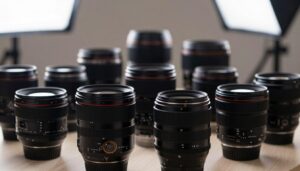
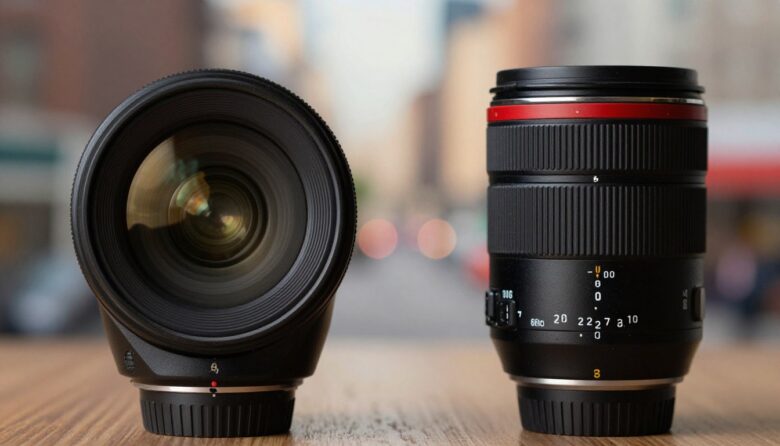
I updated this guide in July 2024 with help from Kunal Malhotra and Jaymes Dempsey to make one thing clear: choosing the right lens type shapes your photos and your process.
I’ve spent years testing different gear, and I know the debate can feel endless. For many photographers, the choice means balancing better image quality against the ease of framing with a single tool.
How I decided between prime and zoom in real situations
For a long time, I kept asking myself which lens type was “better,” but in practice, that question didn’t help much. What really made a difference was paying attention to how I actually shoot. There were days when I carried only primes and loved the image quality, but I also missed moments because I couldn’t reframe quickly. Other times, using a zoom made everything easier, even if the images felt slightly less refined.
From my experience, the choice became much clearer once I stopped thinking in terms of right or wrong and started thinking in terms of context. Different situations demand different tools, and trying to force one type into every scenario only creates frustration.
I realized that the best lens isn’t the one with better specs, but the one that helps me capture the moment without hesitation.
If I could give one practical tip, it would be this: pay attention to your shooting habits before buying more gear. Look at the focal lengths you use most and how often you need to react quickly. This simple observation helped me build a kit that actually fits my workflow instead of following generic recommendations.
In the end, both options have their place, and understanding when to use each one will improve your results more than switching gear constantly.
In my work, I look at how each option affects shooting speed, weight, and the final image. I also consider how a zoom prime or a prime zoom lens fits into a camera bag for field work.
Whether you’re starting out or refining your craft, understanding the trade-offs helps you pick the way that suits your vision.
Key Takeaways
- Updated July 2024 by Kunal Malhotra and Jaymes Dempsey for current guidance.
- One type often gives higher image quality while the other adds flexibility.
- Your shooting style and projects should guide the gear you choose.
- I recommend testing both types on a camera before committing.
- Consider weight, speed, and final image needs when packing gear.
Understanding the Basics of Prime and Zoom Lenses
Let’s break down how fixed and variable focal-length tools work on a camera. I’ll define each type simply so you can spot the strengths when you shoot.
Defining Prime Lenses
A prime lens has a single, fixed focal length. For example, the Sigma 20mm f/1.4 is a true prime lens with a constant length that forces me to move to reframe a shot.
That discipline often improves composition. Prime lenses typically offer wider apertures and simpler optical designs, which can boost sharpness and low-light performance.
Defining Zoom Lenses
Zoom lenses cover a range of focal lengths in one package. Common models I use or recommend include 24-70mm, 16-35mm, and 70-200mm.
A zoom lens lets you change angle of view without moving. That range makes it easier to capture different frames quickly, which many photographers value for events and fast shoots.
- Primes are about single-length performance and image quality.
- Zooms add flexibility and speed when you need multiple focal lengths.
- Both types are essential as you build a kit that fits your shooting style.
Why I Choose Prime Lenses for Superior Image Quality
When image detail matters most, I turn to a prime lens for cleaner results.
The role of aperture and bokeh is central to that choice. A wider aperture gives a shallow depth of field and a creamy background that helps the subject pop.
Many wedding photographers favor a 50mm f/1.2 because it delivers excellent sharpness and a pleasing blur. I find that simpler optical designs in prime lenses often render skin tones and highlights more naturally than complex zoom alternatives.
Using an f/2.8 or wider aperture lets me control how much of the scene stays in focus. That control makes a lot of creative work possible, from tight portraits to moody environmental shots.
- Wider aperture isolates the subject and boosts low-light performance.
- Superior glass usually means better sharpness and overall image quality.
- Simpler construction often yields a more pleasing rendering of colors and contrast.
The Versatility and Convenience of Zoom Lenses
In many shoots I choose gear that keeps me moving. Carrying a lens that covers a wide range saves me time and helps me react to changing scenes.
Defining What a Variable Focal Lens Does
A zoom lens lets you change focal length quickly so you can switch from a wide angle to a tighter frame without swapping gear.
That flexibility means I can capture wide establishing shots and close subject images with one lens. It’s especially useful at weddings, events, and on fast-paced assignments where every second counts.
- One lens can replace several primes, reducing weight and time spent changing equipment.
- The ability to alter length on the fly keeps your composition options open and prevents missed moments.
- Versatility makes these tools a staple in many photographers’ bags, offering a vast range for framing and angle choices.
Comparing Prime vs Zoom Lenses in Low Light Conditions
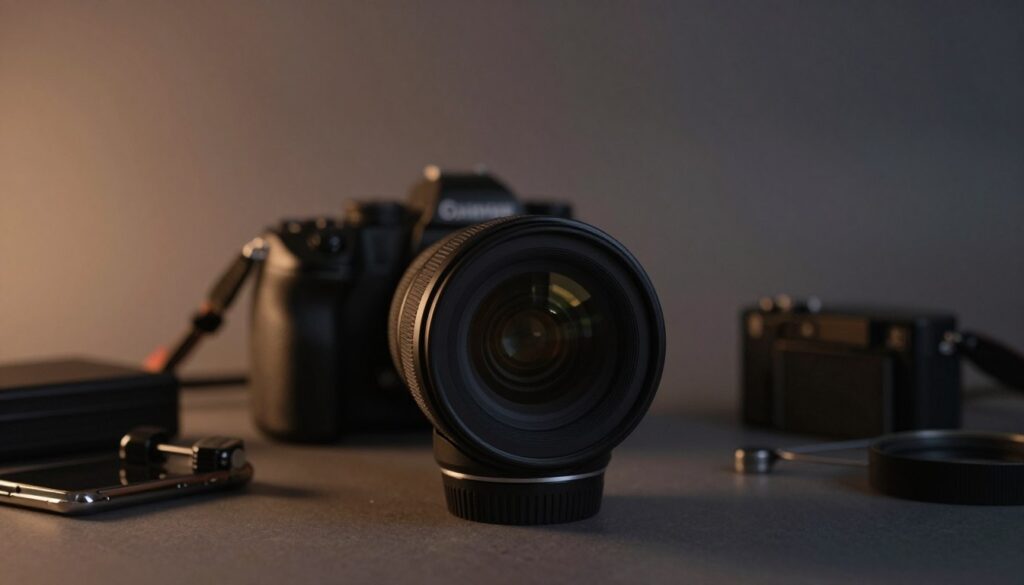
Shooting in dim conditions often forces clear choices about gear and technique. I judge a setup by how well a lens gathers light and how quickly the camera acquires focus.
Focusing Speed in Dim Environments
Autofocus speed matters when subjects move and light is scarce. I find that many prime lens designs lock focus faster at wide apertures, which saves time and missed shots.
The Canon EF 85mm f/1.2L USM is a clear example. Its f/1.2 opening lets more light hit the sensor, so I can use faster shutter speeds and keep sharp images.
Many zoom lens options stop at f/2.8. That steady aperture is useful, but they rarely match the speed and low light advantage of a fast prime.
The Importance of Glass Quality
Good glass improves contrast, sharpness, and depth. I always choose a lens with high-quality elements when I expect low light work.
- Wider aperture like f/1.2 or f/1.8 lets you shoot with less noise and more control over depth of field.
- High-grade coatings and optics keep image quality strong even at wide openings.
- In dim venues, faster focus and better glass together make a big difference for my photography.
How Focal Length Impacts Your Composition
Changing a focal length reshapes how a scene reads and how a viewer experiences a photograph.
The focal length of your lens controls the angle of view. A wider length shows more of the scene and pulls foreground and background closer.
Move to a longer length and the angle tightens. That isolates a subject and simplifies the frame.
When I adjust focal lengths on a zoom, I can try new compositions without walking. That speed helps during fast shoots and when repositioning isn’t possible.
Wide angles work best for landscapes and environmental shots. Longer lengths make portraits and detail work feel intimate.
- Choose a short focal length to capture space and context.
- Choose a longer length to emphasize one subject and blur distractions.
Understanding how different focal lengths affect composition is a key skill. Whether I reach for a compact lens or a flexible zoom, the chosen focal length shapes the final images and the story I tell.
Managing Gear Weight and Portability
On long assignments, the weight of my kit shapes how I work more than any single specification.
I often carry a single Canon 70-300mm because it replaces several short focal-length tools in my bag. That one zoom covers multiple needs and keeps my load light.
Carrying less lets me move faster and stay focused through a long day. One camera and one lens simplify choices, and I stay more discreet at events.
Practical wins I see:
- One zoom can cut the total weight compared with a set of primes.
- Less swapping means fewer missed moments during a busy day.
- An f/2.8 option gives a strong mix of portability and performance.
“I stopped packing every lens and started shooting more creatively with less.”
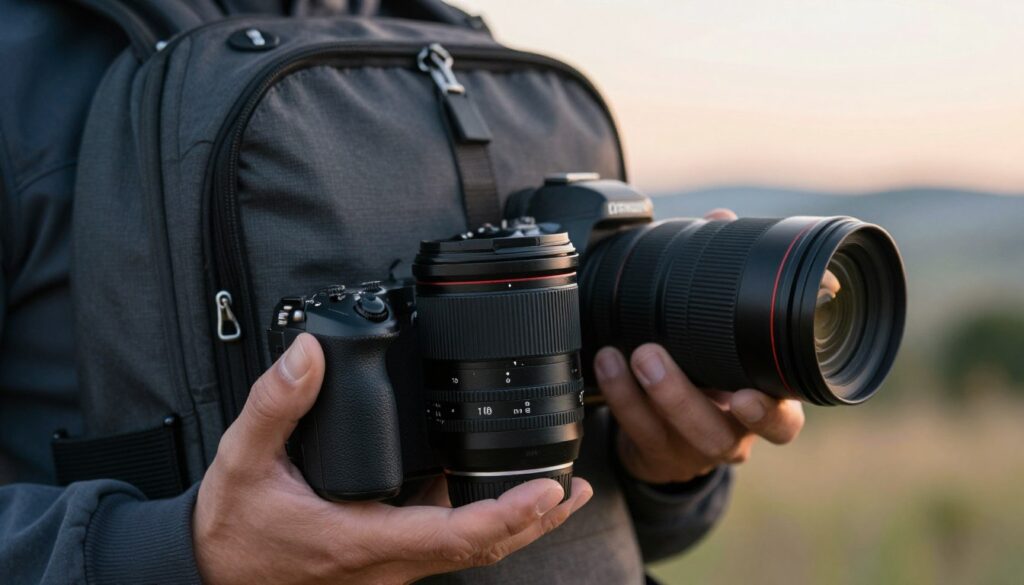
For travel work, reducing gear is a major advantage. I carry fewer items, walk farther, and shoot longer without fatigue.
Choosing the Right Lens for Your Photography Style
Your shooting habits should steer which lens ends up in your bag each day. I think about how I move, how fast I need to react, and what kind of image I want at the end of the day.
If I shoot portraits, I reach for a prime lens that gives a shallow depth field. That narrow plane helps isolate the subject and create a soft background that flatters skin and draws the eye.
When I cover weddings or long events, I prefer the flexibility of a zoom lens. A single tool that covers multiple focal lengths lets me capture wide scenes and tight frames without swapping gear.
Think about low light needs, focal length you use most, and the weight you can carry for a full day. I always invest in high-quality glass because better optics improve sharpness and image quality across situations.
- Match the lens type to your workflow and subjects.
- Choose faster apertures for low light and creamy backgrounds.
- Pick a range or one lens that keeps you shooting, not changing gear.
Final Thoughts on Building Your Lens Collection
I believe a thoughtful kit grows with your work. Invest in high-quality glass that lasts and serves your style over time.
One fast prime lens and a reliable zoom lens cover most needs. The prime lens gives character and low-light speed. The zoom lens adds range and saves time on fast shoots.
Consider aperture requirements like f/2.8 or wider for low light. Match choices to the image results you want and the way you move with a camera in the field.
In the end, the best lens is the one that helps you make the images you imagined.
FAQ
What are the main differences between prime and zoom lenses?
I explain the core difference like this: a fixed-focal-length optic offers one field of view and typically a wider maximum aperture, which boosts sharpness and low-light performance. A variable-length optic covers many focal lengths in one barrel, giving flexibility to frame quickly without changing gear. Each type affects depth of field, composition, and how much glass you carry.
Why do I say fixed-focal lenses often produce better image quality?
I find that dedicated-design glass has fewer moving elements, so it usually resolves more detail and gives smoother out-of-focus areas. The wider apertures, like f/1.8 or f/1.4, also let me shoot in dim light and create a shallow depth of field that separates subject from background.
When is a variable-length optic the smarter choice?
When I need speed and flexibility — for events, travel, or run-and-gun work — a single lens that covers a broad range keeps me ready for changing scenes. It reduces lens swaps and gear weight, so I miss fewer shots and stay mobile.
How does aperture affect low-light performance and bokeh?
Aperture controls light and background blur. A wider opening lets in more light and creates creamier backgrounds, which I like for portraits. Narrower settings increase depth of field and are helpful when I need more of the frame in focus, like in landscapes.
Do fixed-focal lenses autofocus faster in dim environments?
Often, yes. Many single-length designs have simpler internal focusing groups and larger maximum apertures, so cameras get more light for autofocus sensors. That said, modern variable-length optics with quality glass can autofocus very quickly too.
How important is glass quality when shooting in low light?
Very important. Higher-quality elements and coatings reduce aberrations and improve contrast, which translates into cleaner images at higher ISOs. I prioritize lenses with good optical formulas when I plan night or indoor shoots.
How does focal length change my composition choices?
Shorter focal lengths widen perspective and include more background, which I use for environmental portraits or street scenes. Longer lengths compress distance and isolate subjects, making them ideal for portraits or wildlife. Choosing length shapes the story I want in the frame.
How should I balance gear weight and portability when building a kit?
I think about the shoot length and priorities. One versatile lens keeps my pack light for travel. For creative control and top image quality, I carry a couple of compact fixed-length options. Mixing a lightweight zoom with one fast fixed glass often gives the best compromise.
Which lens type suits different photography styles like portrait, landscape, or sports?
For portraits I prefer fast single-length glass for subject isolation. Landscapes benefit from sharp wide-angle optics, either fixed or high-quality zooms. Action and sports usually demand a reach-focused zoom to track movement without swapping lenses.
Is it better to own several single-focal lenses or a single cover-all glass?
It depends on my goals. Owning a few well-chosen fixed-length pieces gives superior image character and low-light ability. A single high-quality variable-length optic gives unmatched convenience. I usually choose a hybrid approach to get the strengths of both.
How does glass choice affect sharpness across the frame?
Optics designed for one focal length tend to deliver more uniform sharpness from center to corner. Broad-range designs can show variation at certain focal settings, especially near their extremes. I examine sample images and MTF charts from trusted brands like Canon, Nikon, Sony, or Sigma before deciding.
Can I get professional results with an affordable lens?
Absolutely. Many budget-friendly optics from manufacturers such as Canon, Nikon, Sony, Tamron, and Sigma offer excellent performance. Technique, lighting, and post-processing matter as much as the glass itself, so I focus on those alongside lens choice.

Noah Sterling is a prime lens photographer and visual storyteller dedicated to capturing sharp, intentional imagery through fixed focal lengths. He shares practical insights on composition, depth, and lens choice, helping photographers master simplicity and achieve powerful, professional results.