Updated
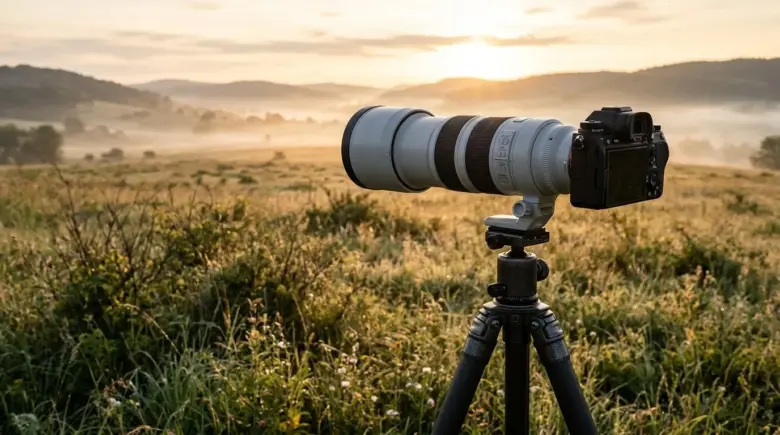
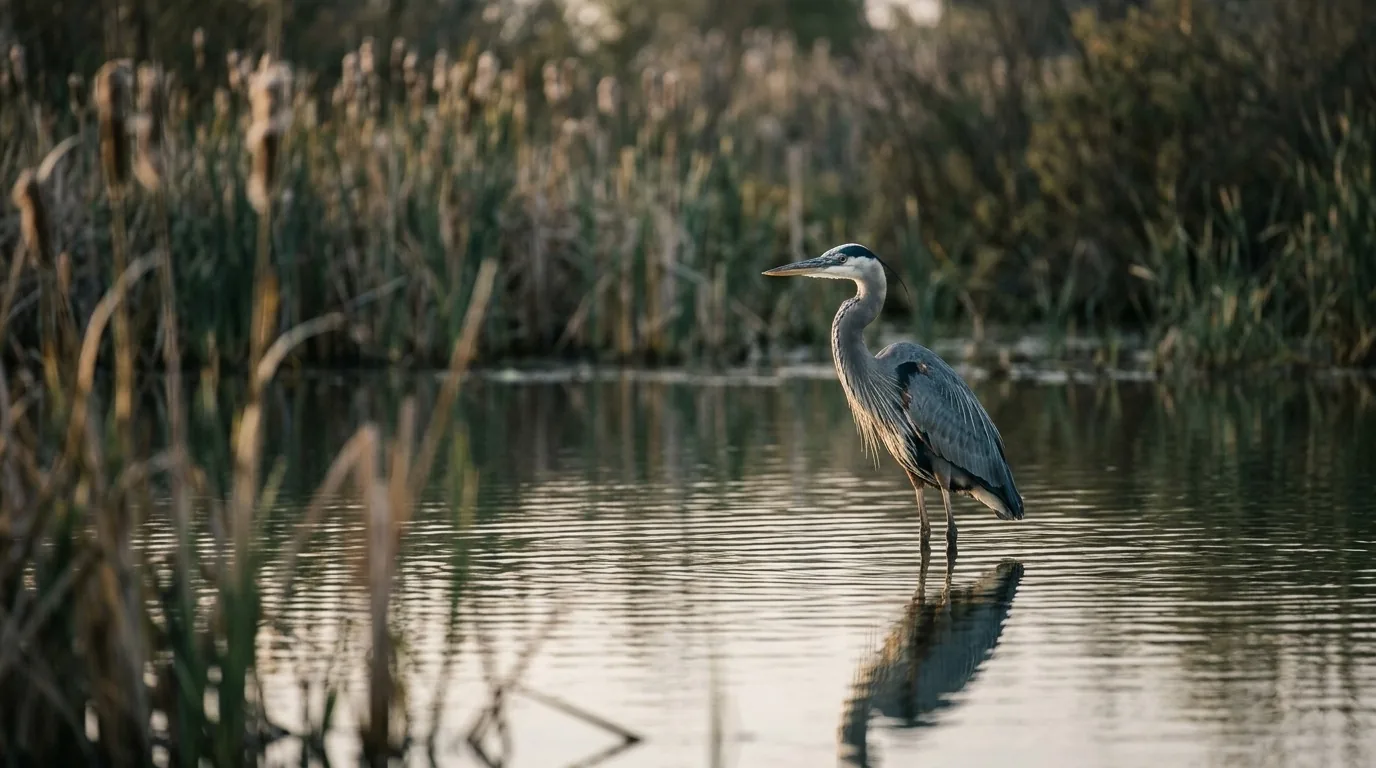
What is a telephoto lens? In everyday use, it is a lens with a long focal length, usually 70mm or more on full frame, that makes distant subjects look larger and shows a narrow slice of the scene. Photographers use it for wildlife, sports, portraits and distant landscapes. At 400mm, a bird 20 meters away can fill much of the frame, where a 50mm would show it as a small dot.
Strictly speaking, “telephoto” also describes an optical design. A true telephoto lens uses a special group of glass near the rear to make the lens physically shorter than its focal length, as the Wikipedia entry on telephoto lenses explains. Almost every modern long lens uses this design, so the two meanings now overlap.
Telephoto focal length ranges
| Full-frame focal length | Name | Horizontal view | Typical subjects |
|---|---|---|---|
| 70 to 135mm | Short telephoto | 29 to 15 degrees | Portraits, stage, details |
| 135 to 300mm | Medium telephoto | 15 to 7 degrees | Sports, events, landscapes |
| 300mm and up | Super telephoto | Under 7 degrees | Wildlife, field sports, aviation |
On a 1.5x APS-C camera, a 200mm lens gives the same view as about 300mm on full frame. That is why crop bodies are popular with wildlife shooters on a budget. The lens does not change, but the smaller sensor records a tighter part of its image.
What does a telephoto lens do?
It brings distant subjects closer
Doubling focal length doubles the size of a subject on the sensor. A 400mm shows a subject twice as large as a 200mm from the same spot. This matters when you cannot or should not get closer, such as near wild animals or on the side of a field.
It narrows what you see
With a narrow view, you pick out one part of a scene and leave the rest behind. That helps you hide distractions. A step to the left can swap a bright car for a dark hedge behind your subject.
It blurs backgrounds
Long lenses produce strong blur, even at modest apertures. A 200mm at f/4 has an opening of 50 mm. You can use this effect for portraits too, as explained in our guide on how to get bokeh.
What “compression” really means
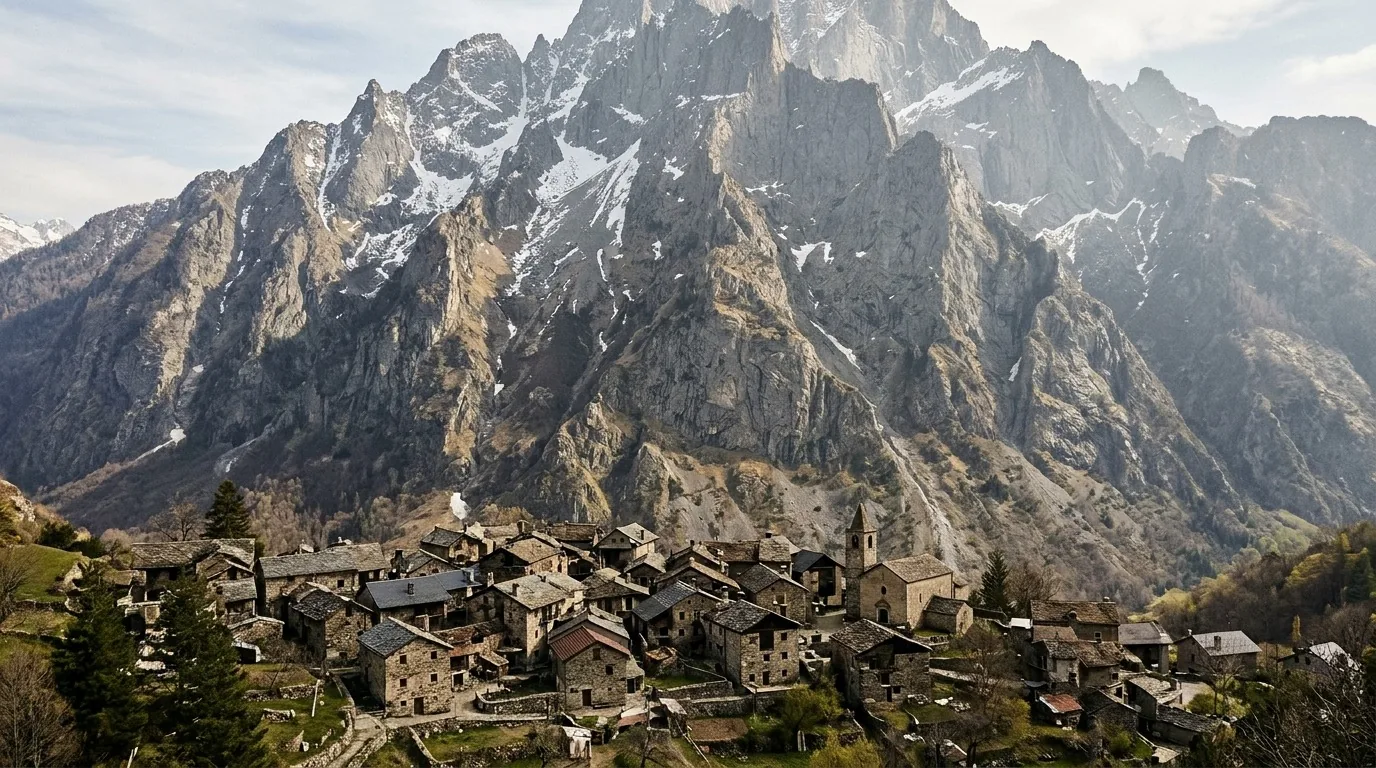
Photos taken with long lenses seem to stack objects closer together. A mountain looks huge behind a village, or a line of runners seems pressed together. People often say the lens causes this, but the cause is your distance from the subject. From far away, near and far objects have similar apparent sizes. The long lens simply lets you fill the frame from that distance.
You can test this. Take a wide photo and a telephoto photo from the same spot, then crop the wide one to match. The perspective will be identical. The Cambridge in Colour telephoto tutorial shows this effect with examples. It matters in practice: to make a background feel large, walk away from your subject and use a longer lens. To learn more about moving, see our guide to the benefits of a prime lens.
Common uses
- Wildlife: 300mm to 600mm keeps a safe, respectful distance.
- Sports: 70-200mm suits indoor courts, and longer lenses suit big fields.
- Portraits: 85mm to 200mm gives flattering proportions, as our portrait prime lens guide shows.
- Landscapes: long lenses isolate a ridge or a pattern of light.
- The moon: at 600mm on full frame, it still takes up only about a seventh of the frame width.
How to avoid blurry telephoto shots
Long lenses magnify everything, including shake. These habits make the biggest difference.
- Keep the shutter speed at or above one over the effective focal length. At 400mm, use about 1/400s.
- For moving subjects, go faster: 1/1000s for birds in flight or running players.
- Turn on stabilization for handheld work. Switch it off on a firm tripod if your manual recommends it.
- Use a monopod, a beanbag or a wall for support.
- On hot days, shoot early. Heat haze softens distant subjects, and no lens can correct it.
Teleconverters and crop modes
A teleconverter is a small lens group that fits between the camera and a compatible lens and multiplies its focal length. A 1.4x model turns a 200mm into 280mm, and a 2x model makes it 400mm. You pay in light: one stop for the 1.4x and two stops for the 2x, plus a small loss of sharpness. Not every lens accepts one, so check the maker’s list.
Cropping is the other way to get more reach. High-resolution cameras let you cut into the frame and still keep a usable file. Cropping does not add detail, but it may match what a cheap converter delivers. Try cropping your existing photos before you spend money on extra reach.
Prime or zoom telephoto?
| Type | Strength | Weakness | Good for |
|---|---|---|---|
| Telephoto zoom, 70-300mm | Light, affordable, flexible | Slow aperture at the long end | First long lens, daylight |
| Fast zoom, 70-200mm f/2.8 | Bright, professional build | Heavy, expensive | Events, indoor sports |
| Prime telephoto lens, 300mm to 600mm | Very wide aperture, top image quality | Very heavy, high cost | Pro wildlife and sports |
| Light slow prime, 400mm or 600mm f/6.3 to f/11 | Portable reach | Needs good light | Hiking and birding |
For most beginners, a 70-300mm zoom is the right first long lens. It is cheap, teaches you the look of long focal lengths and can be found used at a good price. Our fixed vs zoom lens guide covers the wider trade-off. Before you buy, check the aperture at the long end, since that decides how useful the lens will be at dawn and dusk. Long lenses are also heavier, so a strap and a tripod collar help a lot. For a look at what each stop adds, read about what a fast lens does.

Adriano Antonio Rodrigues da Silva edits PrimeFrame Studio. The guides on this site are research-based explainers on prime lenses, built from manufacturer specifications and published technical tests. They are not personal lab reviews.