I often ask myself whether paying more for a sealed setup really helps when I shoot outdoors. I care about protecting my gear from rain, dust, and water spray while I focus on composition.
Manufacturers build many modern cameras to resist rough conditions, but I know the actual protection level varies by brand and model. That difference matters when I plan long days in the field or trips into the wild.
I prefer to make choices that let me shoot confidently. Understanding the limits of my equipment helps me decide when to invest and when a simple cover will do. My goal is clear images without constant worry about moisture or grit.
Key Takeaways
- I prioritize protection for my camera gear when shooting outdoors.
- Not all models offer the same level of dust and water resistance.
- Investing in sealed options can reduce risk in rain or snow.
- Simple covers or habits often suffice for light exposure.
- Know your equipment limits to shoot confidently and protect costly lenses.
Understanding Lens Weather Sealing Technology
Before I buy gear, I want to know exactly how well it will hold up in bad conditions. Clear facts about construction help me choose the right camera and accessories for outdoor work.
Defining gaskets and seals
Manufacturers like Fuji add rubber gaskets and silicon linings around the mount and other openings to block dust and spray. The Fuji X-H1, for example, lists dozens of sealing points on the body and grip that reduce ingress risks.
The reality of IP ratings
The IP system gives a simple way to compare protection. The OM-1 Mark II carries an IP-53 rating, and the M.Zuiko 12-40mm f/2.8 Pro II matches that level for consistent defense across cameras and optics.
I learned that the Leica SL3 moves to IP-54, which raises resistance to water spray from any direction. Still, an IP number is not the same as full waterproofing, so I treat it as measured protection rather than a guarantee.
“IP ratings and smart design give me confidence, but careful handling remains essential.”
- Tip: Use ratings to compare models, not as an excuse for risky use in heavy rain.
Assessing Your Need for Environmental Protection
When I plan a trip, I weigh how much protection my gear really needs for a damp day in the field.
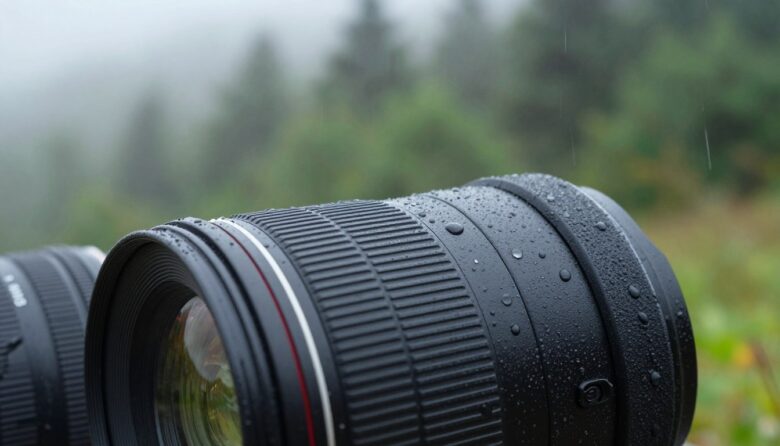
I learned the value of added defense on a long shoot. Thomas Stirr logged 11 of 14 days of rain and fog in Newfoundland. That kind of run tests both my camera and my patience.
Ask yourself three simple questions:
- How often do I face inclement weather on shoots?
- Am I willing to risk my camera body for a few creative frames?
- Do fellow photographers or folks I trust advise avoiding wet days?
“It is liberating to capture images on a rainy day without worrying about my gear failing.”
| Typical Days | Risk Level | Suggested Protection |
|---|---|---|
| Mostly dry | Low | Basic cover, careful mount changes |
| Occasional rain | Medium | Weather sealing for camera, sealed lens |
| Many wet days | High | Fully sealed system, extra water protection |
Essential Field Techniques for Inclement Weather
Working in damp conditions means I plan routines that keep my gear safe and my shooting on track.
Managing Gear in Humid Environments
I keep my camera in a water-repellent bag when I am not shooting. This helps reduce moisture buildup and prevents fog on the glass.
Tip: After a wet day, I let gear dry slowly in a warm, dry room to avoid condensation inside the body.
The Dangers of Changing Lenses Outdoors
Changing a lens in windy or wet conditions is a risky way to expose the internal elements to dust and water. I avoid swap-outs unless I can shelter the camera and work quickly.
If I must change glass, I face the mount downward and use a clean, dry towel under my hands.
Using Protective Covers and Bags
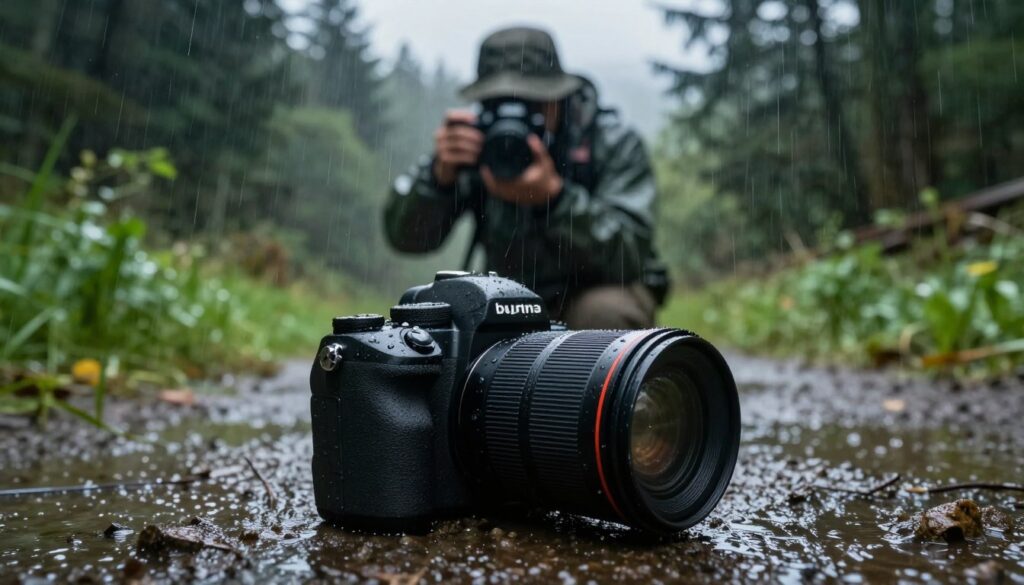
I always carry an Op/Tech Rainsleeve, which costs about C$15 for a two-pack, for quick rain protection. For longer exposure, I use a Peak Design shell (roughly C$65 for medium) for stronger coverage.
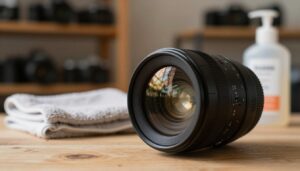
Even with factory-level sealing, I keep a cleaning kit and a dry bag. Storing gear in a repellent bag matters as much as having sealed components on a snowy day.
| Item | Cost (approx.) | Best Use |
|---|---|---|
| Op/Tech Rainsleeve (pack of 2) | C$15 | Quick rain protection, light showers |
| Peak Design Shell (Medium) | C$65 | Extended exposure, wind-driven rain |
| Water-repellent bag | Varies | Storage and transport in snow or wet conditions |
| Cleaning kit | Varies | Maintain front element and body after shoots |
Top Performing Weather Sealed Lenses for Outdoor Photography
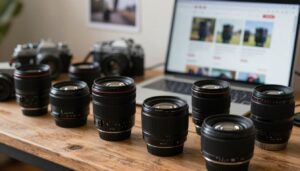
I keep a short list of rugged optics that handle rain and rough use without fuss. These picks balance sharp image quality with practical protection for field work.
Selecting the Right Mount for Your System
Check mount compatibility before buying so your camera body can pair with a sealed option. Proper fit helps block dust and water and preserves autofocus performance.
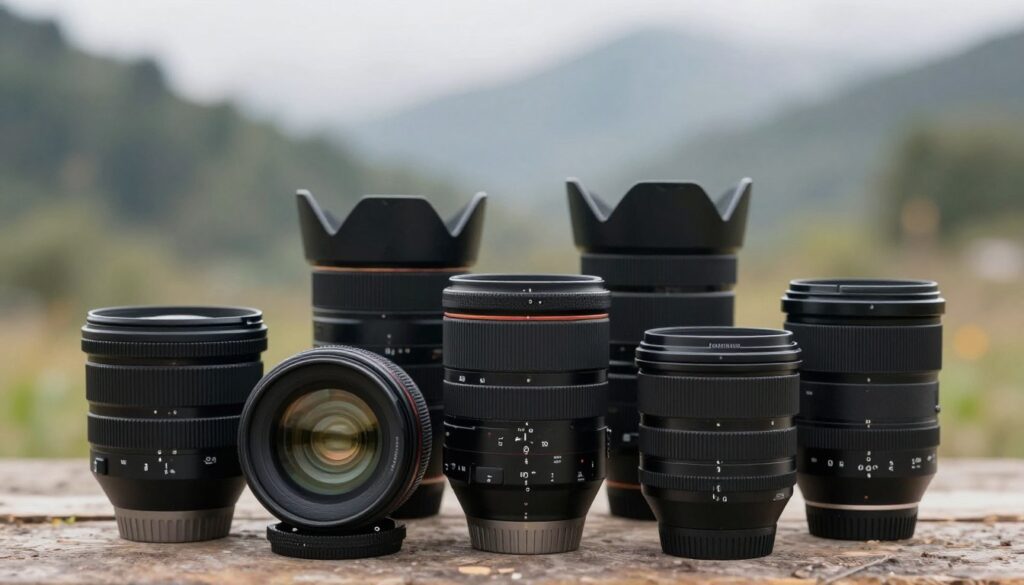
- Micro Four Thirds: Panasonic 12-60mm F2.8-4 Power OIS — fast AF and good resistance for rainy shoots.
- Fujifilm X Mount: Fujifilm 16-55mm F2.8 LM WR — excellent image quality and reliable protection.
- Sony FE: Tamron 28-75mm F2.8 Di III RXD — solid build and a useful level of defense.
- K Mount: Pentax 15-30mm F2.8 ED SDM WR — rugged choice for landscapes in snow or wet conditions.
“I always verify mount fit and test in light rain before long trips.”
| System | Recommended | Best For |
|---|---|---|
| Micro Four Thirds | Panasonic 12-60mm | All-purpose, rain |
| Fujifilm X | Fuji 16-55mm | Pro image, field work |
| Sony FE / Pentax K | Tamron 28-75mm / Pentax 15-30mm | Travel and landscape |
Final Thoughts on Investing in Weather Resistance
I chose more durable gear after I missed shots on wet days. That decision changed the way I work and let me chase a wider range of images without fear.
For most photographers, a sealed camera and a quality bag offer real peace of mind. I find a sealed lens plus a water-repellent bag covers nearly every rainy or windy shoot. It keeps my equipment ready and my focus on composition.
My experience says this: if you shoot outdoors often, the extra cost is worth it. Even folks who rarely face bad conditions benefit from the freedom to shoot whenever inspiration strikes.
FAQ
Do I need weather-sealed prime lenses for outdoor shooting?
I find that sealed glass and bodies become essential when I shoot in rain, snow, dust, or near salt spray. If I often work outdoors or on assignment in changing conditions, I invest in gear with protective gaskets and reinforced mounts. For casual shoots in mild conditions, I can get by with careful handling and covers instead of buying the most rugged options.
What do gaskets and seals actually do?
Gaskets and rubber seals block moisture and fine particles at critical junctions—around the mount, switches, and moving groups. I rely on them to slow down intrusion and protect electronics and optics. They don’t make equipment invulnerable, but they buy me time and reduce the risk of corrosion and grime buildup.
Do IP ratings tell the whole story?
Not really. IP ratings give a standardized idea of dust and water resistance, but manufacturers don’t always publish full scores for interchangeable components. I treat IP numbers as a helpful guide alongside real-world tests and brand reputation rather than a definitive guarantee.
How do I assess my need for extra protection?
I look at how often I shoot outdoors, the environments I visit, and how much risk I’m willing to accept. If my work includes weddings on windy beaches, mountain hikes, or outdoor sports in wet seasons, I prioritize robust gear. If most of my shooting is in studios or clear weather, I weigh cost and weight more heavily.
What are practical field techniques for shooting in humid environments?
I keep my equipment in sealed bags when not in use and use silica packets in my pack to absorb moisture. I avoid leaving gear in hot, humid cars for long periods. When moving from cold to warm places, I let my kit acclimate in a sealed container to prevent condensation forming on glass and electronics.
Why is changing elements outdoors risky?
Swapping glass or cameras exposes internal mounts and sensor surfaces to rain, dust, and pollen. I always minimize swaps in the field, use quick-change systems when possible, and work with my back to the wind or in sheltered spots to reduce exposure during swaps.
What covers and bags work best in bad weather?
I use rain covers designed for my camera shape and pack waterproof camera inserts or dry bags inside my backpack. A good zippered protective pouch for spare gear and a lightweight tarpaulin or poncho can save a shoot when a downpour starts unexpectedly.
How should I choose a mount for my system when planning outdoor work?
I pick a mount that matches my camera body and offers reliable mechanical tolerances and a solid flange. Brand-matched mounts tend to deliver the best sealing and communication. If I mix systems with adapters, I check for secure fit and weather protection at the adapter junction.
Which models consistently perform well for outdoor photography?
I look to offerings from Canon, Nikon, Sony, Fujifilm, and Sigma that advertise robust construction and proven field use. Models marked for professional use often include better dust and moisture resistance. I also read real-world tests and reviews from photographers who shoot in harsh conditions before buying.
Is it worth investing in weather-resistant gear or should I rely on protective accessories?
For my professional work, I invest in durable gear because it saves time and stress and often has better resale value. For hobbyist work, I balance cost against frequency of use: sometimes a high-quality cover and careful habits give me good performance without the higher upfront price.

Noah Sterling is a prime lens photographer and visual storyteller dedicated to capturing sharp, intentional imagery through fixed focal lengths. He shares practical insights on composition, depth, and lens choice, helping photographers master simplicity and achieve powerful, professional results.