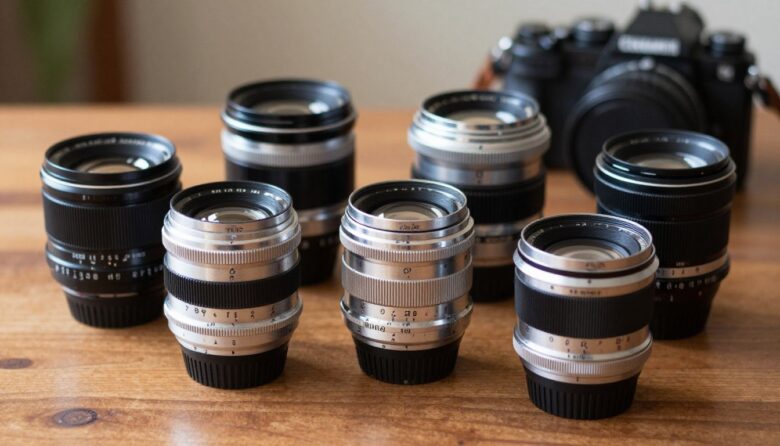
I began this journey to chase the soft, warm film look I admired in work by Robert Elswit and Janusz Kamiński. I wanted images that felt organic, not clinical, so I started testing old glass on current camera bodies.
My tests showed that bodies like the BMPCC6K, Canon EOS R, and Lumix S1H pair beautifully with this gear. They deliver the character I want without needing ALEXA-level systems.
What using vintage lenses really taught me over time
When I first started experimenting with older lenses, I honestly expected them to perform like modern ones—just cheaper. But after a few shoots, I realized that wasn’t the point at all. Some images came out softer, with lower contrast, and at first I thought something was wrong. Over time, I understood that this was actually part of the charm—they don’t try to be perfect, they create a different kind of image.
From my experience, the biggest shift was changing my expectations. Instead of chasing sharpness or technical perfection, I started paying attention to how the image felt. That mindset helped me get better results because I was choosing the lens based on the mood I wanted, not just the specs.
I stopped asking “is this lens better?” and started asking “does this lens match what I want to create?”
If I could give one practical tip, it would be this: test your vintage lens in different lighting conditions before relying on it. Some of them behave very differently depending on light direction and intensity, especially with flare and contrast. Understanding those quirks early can save you time and help you use them intentionally instead of fighting against them.
In the end, vintage lenses are less about technical performance and more about creative control. Once you accept their limitations, they can become one of the most interesting tools in your kit.
The hunt for the best vintage lenses and affordable vintage glass is rewarding. When I use an affordable vintage lens on a modern camera, I get a unique way of seeing light, color, and texture.
It is a fact that sensor size and the image rendition you want will shape which lens you choose. Over the years I’ve built a short list that balances professional results with fair price and real-world usability.
Key Takeaways
- Using old lenses can add warmth and organic rendition to your photography.
- Bodies like BMPCC6K, Canon EOS R, and Lumix S1H suit vintage glass well.
- Careful selection of lens and sensor yields the film-like image you want.
- My recommendations focus on professional looks without high prices.
- Testing gear over years helped me find reliable, affordable options.
- These combinations are ideal for creators seeking character beyond clinical sharpness.
Why I Love Shooting with Vintage Prime Lenses
There’s something about older glass that turns precise footage into something feeling more alive.
I love shooting with vintage lenses because they tame the digital sharpness of modern sensors and deliver a warmer, more organic look. Soft focus, gentle contrast, and unique bokeh all help images feel like film rather than a clinical capture.
When you pick up a vintage lens, you accept the quirks: dust, tiny scratches, or a bump here and there. Those flaws often become character. I’ve got a small selection I rotate for portraits and mood pieces.
The best vintage lenses give a soft focus and creamy bokeh that invite creative experimentation. Compared with modern lenses, you’ll notice lower contrast and a distinct focus falloff that shapes mood in ways a modern lens rarely does.
- Soft, film-like rendition that tames digital sharpness.
- Imperfections become creative tools, not problems.
- Great for portraiture and cinematic atmosphere.
| Characteristic | Older Glass | Modern Lenses | Practical Use |
|---|---|---|---|
| Contrast | Lower, milder tones | High, punchy color | Choose older for mood; modern for clarity |
| Focus Falloff | Smoother, creamier | Sharper, uniform | Older for portraits; modern for detail |
| Artifacts | Dust, slight haze, unique bokeh | Minimal, clean rendering | Artifacts add character to storytelling |
Essential Gear and Adapters for Your Mirrorless Setup
Getting old glass to behave on a modern mirrorless body starts with the right adapters. I always check mounts before I buy any gear so I avoid surprises on set.
Understanding Mount Compatibility
First, identify the mount on your camera and the mount on the lens. Adapters are not one-size-fits-all. A mis-matched mount can ruin focus range or introduce vignetting.
Quick checklist: confirm flange distance, mechanical fit, and whether the adapter keeps infinity focus. I keep a small list of trusted adapters for my cameras to speed prep time.
The Role of Speedboosters
Speedboosters—like Metabones models—do more than mount a lens. They compress the image circle to match smaller sensors and increase effective aperture. That gives more light and a shallower depth of field.
“A good speedbooster can make a classic lens sing on a modern camera.”
| Adapter Type | Primary Benefit | When to Use |
|---|---|---|
| Simple mechanical | Cheap, reliable fit | When you only need to mount and focus manually |
| Smart electronic | Maintains EXIF and autofocus (varies) | When some automation matters |
| Speedbooster | Wider aperture, preserved field of view | Low-light scenes and cinematic image |
Tip: choose adapters with good internal coatings and precision elements. Clean optical paths help your photography look cleaner and keep old glass rendering its best.
The Iconic Canon FD Series
Canon’s FD line has a way of turning simple frames into warm, cinematic moments. I often reach for these vintage lenses when I want softer contrast and a gentle rendition that feels like film.
I’ve used a 24mm FD lens for years, and paired with a Metabones speedbooster on the BMPCC4K it delivers that dreamy look I chase. The mechanical build is solid, so these lenses stand up on set and across shoots.
Why I recommend FD glass:
- Affordable price and wide availability.
- Warm tonal rendition and smooth focus falloff.
- Great adaptability to Sony E and micro four-thirds mounts.
| Feature | Typical FD Result | When to Use |
|---|---|---|
| Contrast | Milder, film-like | Portraits, mood pieces |
| Focus | Smoother edges, shallow DOF | Closeups and soft backgrounds |
| Aperture options | Practical control for stops | Low-light and controlled depth |
| Build | Robust mechanical mount | Reliable for heavy use over years |
Exploring the Contax Zeiss and Nikon Nikkor Options
Contax Zeiss and Nikkor glass offer two clear paths when you want character on modern mirrorless cameras. I mount both on bodies like the BMPCC6K to see how each responds to a Super 35 sensor.
The Contax Zeiss look is famous for a soft, film-like rendering and legendary bokeh. These lenses were designed for 35mm full-frame, and on my camera they yield a warm, tactile feel that differs from modern lenses.
The Nikkor f/1.4 started life on my Nikon F2 as a stills workhorse. When adapted for video it keeps strong contrast and reliable focus performance, making it a solid choice for run-and-gun shoots.
What to check before buying:
- Inspect optical elements for haze or fungus—image quality depends on their condition.
- Confirm the adapted lens retains infinity focus on your camera.
- Try both on a shoot to compare focus falloff and contrast in your workflow.
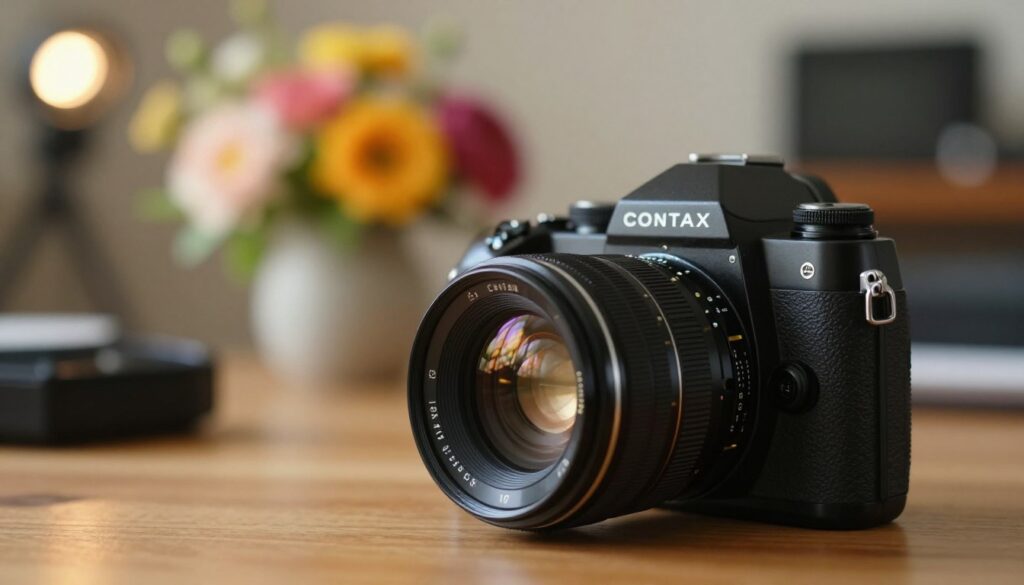
| Characteristic | Contax Zeiss | Nikkor f/1.4 |
|---|---|---|
| Contrast | Lower, softer tones | Higher, punchier |
| Bokeh | Creamy, sought-after | Smooth, controlled |
| Use case | Portraits, mood pieces | Run-and-gun, highlights |
“The bokeh from Zeiss often wins me over when I want mood over clinical sharpness.”
Budget Friendly Picks for Portraiture
I like to keep a small, affordable kit that still delivers professional portrait results. A couple of classic, low-cost options give you character without draining your budget.
Two lenses I reach for again and again are the Helios and the Zuiko 100mm. Each brings a different feel to close-ups and medium shots.
The Zuiko Advantage
The Zuiko 100mm is widely regarded as one of the best vintage lenses for portraiture. I find it delivers sharpness where it matters and warm tones that flatter skin.
The Helios, made for an M42 mount, is cheaper and a bit rough around the edges. It is fast and playful. When I want swirly bokeh or a softer background, the Helios is my go-to.
“Buying used gear from trusted sellers saves headaches and keeps your kit reliable.”
- Buy smart: make sure to source from KEH or a well-rated eBay seller.
- The Helios needs an M42 adapter, but the look is worth the small extra step.
- If you want one sharp, commercial-ready option, the Zuiko 100mm is the pick.
| Lens | Strength | Best Use |
|---|---|---|
| Zuiko 100mm | Sharp, warm rendition | Commercial portraits, headshots |
| Helios (M42) | Fast, characterful, affordable | Artistic close-ups, creative projects |
| Buying tip | Reputable sellers only | KEH, high-rated eBay listings |
Professional Cinema Glass for Modern Sensors
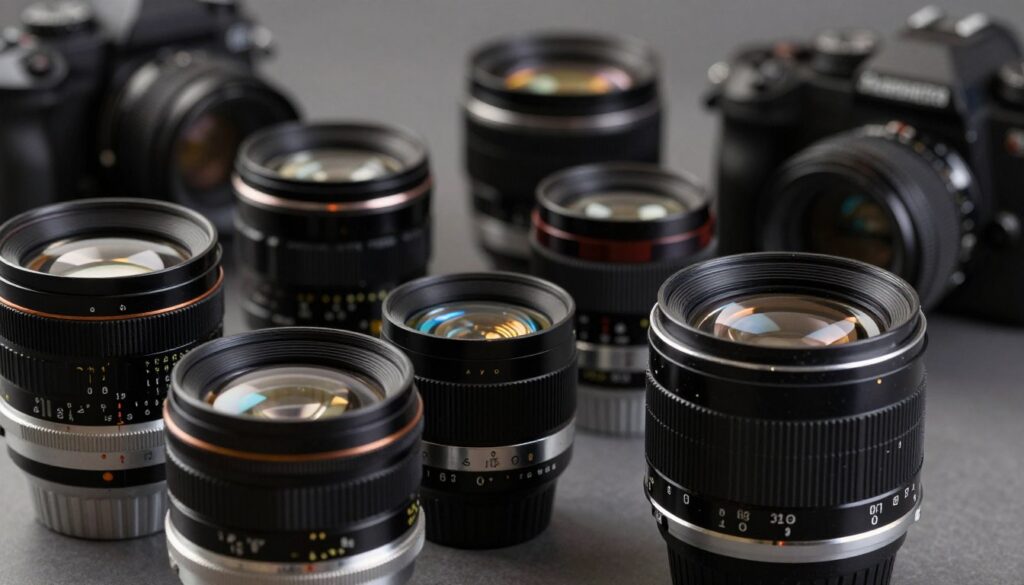
High-end motion-picture optics still set the standard for character on modern sensors. I turn to these lenses when I need color, bokeh, and tonal depth that feel timeless.
Why choose cinema glass? These designs were built for film production and handle high-resolution cameras without losing their soul. They offer consistent mechanical quality and rehousing options to meet today’s mounts.
Cooke Speed Panchros
The Cooke Speed Panchros date to the 1920s and were engineered by Horace W. Lee. They give a soft look and beautiful bokeh that many cinematographers still seek.
Their rendition adds warmth to skin tones and a cinematic feel you can’t fake in post.
Panavision Primo V Series
Panavision’s Primo V lenses are re-engineered for high-resolution 35mm digital cameras. They correct off-axis aberrations and keep fine elements sharp across the frame.
The result: an organic flavor of older glass with modern image fidelity.
Zeiss Super Speeds
Introduced in the 1970s, Zeiss Super Speeds are famous for fast apertures such as f/1.2. Stanley Kubrick used them on Barry Lyndon, proving their low-light pedigree.
They remain a go-to when I need shallow depth and reliable focus for handheld work.
- These cinema lenses often include smaller apertures for precise control over depth of field and contrast.
- Many are rehoused by services to meet modern mechanical standards and mounts.
- Using them connects you to gear that creators have trusted for decades to shape iconic images.
“A true cinema lens delivers a look you feel before you see it.”
Best Practices for Sourcing and Maintaining Old Glass
Finding good used glass means balancing condition, cost, and the seller’s reputation.
I start by checking reputable marketplaces. KEH and well-rated eBay sellers are my first stop. For high-cost items I try renting from BorrowedLenses or ShareGrid to test the look before buying.
When you shop: inspect photos for haze, fungus, and oil on the aperture blades. Make sure the focus and aperture rings move smoothly. If a seller allows returns, that reduces risk.
- Prefer sellers with return windows and clear photos.
- Test gear on arrival—check focus, aperture, and the glass for defects.
- Factor repair costs into your price, especially for complex cinema glass.
- Store lenses in a dry, cool place to prevent fungus and dust.
“Regular servicing keeps older optics performing like new.”
| Action | Why it matters | Quick tip |
|---|---|---|
| Rent first | See the rendition and bokeh on your camera | BorrowedLenses, ShareGrid |
| Inspect elements | Internal haze lowers image quality | Ask for clear close-ups |
| Regular service | Maintains aperture and focus mechanics | Shop with experienced techs |
I’ve got a short list I trust for purchase and upkeep. Buying smart keeps prices reasonable and your photography consistent for years.
Conclusion
Ultimately, the right adapted lens can become as important as the camera body itself. I recommend choosing glass that inspires you more than chasing specs. A single well-chosen piece can change your image and push your photography in a new direction.
Keep condition and serviceability front of mind when you buy. Good care keeps optics working well and protects your investment from extra repair costs or surprise price hikes.
Embrace small imperfections. They often give character that no modern optic can fully replicate. If a lens makes you want to shoot, it’s the right one for your work today.
FAQ
Can I mount classic manual glass on my Sony or Canon mirrorless camera?
Yes — I mount older manual-mount glass on Sony E, Canon RF, Nikon Z, and Micro Four Thirds bodies all the time. You’ll need a mechanical adapter for the specific original mount (Canon FD, Contax/Yashica, Nikon F, Olympus OM, etc.). These adapters hold the lens at the correct flange distance so you get infinity focus. Autofocus won’t work, so be prepared to focus by hand and use focus peaking or magnification in live view.
Do I lose image quality when using lenses made decades ago on modern sensors?
Not necessarily. Many older optics render beautifully on high-resolution sensors, giving me pleasing character — softer highlights, unique bokeh, and distinct contrast. Some designs show more flare or lower corner sharpness on full-frame sensors, but that can be desirable for portrait and cinematic work. If you want tack-sharp edges and clinical contrast, modern designs may be better, but classic glass offers a look modern optics rarely replicate.
How important is aperture and speed for shooting portraits with older glass?
Aperture matters a lot. Wide apertures like f/1.4 or f/1.8 let me isolate subjects with shallow depth of field and smooth background rendering. But many older designs also perform beautifully stopped down to f/2.8–f/5.6 for sharper images. Choose a lens that matches the look you want: soft, dreamy images at wide stops or crisper results when stopped down.
What adapters or accessories should I buy first to use vintage glass on mirrorless bodies?
Start with a robust mount adapter for your lens to camera combination and a couple of useful items: a rear cap-safe adapter to protect mounts, a handheld loupe or focus aid, and a dedicated cleaning kit for coatings and elements. If you shoot video, consider a follow focus or a clamp-on gear ring for smoother manual focus pulls.
Are speedboosters worth the investment?
Speedboosters can be worthwhile if you want to gain an extra stop of light and reduce crop-factor field-of-view on APS-C or Micro Four Thirds bodies. I use them when I want a wider angle and shallower depth of field from full-frame legacy glass. They change the effective focal length and may affect corner sharpness and vignetting, so test before relying on them for critical work.
Which mounts and brands are most compatible with modern mirrorless cameras?
Canon FD, Contax/Yashica, Nikon F, and Olympus OM are some of the most common mounts people adapt. Sony E and Canon RF are particularly flexible platforms for adapted glass. I recommend checking adapter availability and build quality for your chosen mount; well-made adapters maintain flange distance and help avoid tilt or play.
How do Contax Zeiss and Nikon Nikkor glass differ in rendering?
Contax Zeiss often gives a silky, three-dimensional look with rich micro-contrast and pleasing bokeh, which I love for portraits. Nikon Nikkor tends to be more clinical and sharp with excellent contrast, especially in later designs. Both have classic pieces that offer unique character; the best choice depends on whether you want mood and texture or razor-sharp detail.
Can I use old cinema glass like Cooke Speed Panchros or Zeiss Super Speeds on digital bodies?
Absolutely. Many cinematographers mount vintage cinema glass on modern digital cinema and mirrorless cameras using appropriate PL or adapter mounts. These lenses are designed for consistent color and organic roll-off, which works very well with modern sensors for narrative and commercial work. Be mindful of weight and balance — some cinema lenses are heavy and need proper support.
What should I look for when buying affordable classic glass for portraits?
Look for clean optics (no haze, fungus, or separation), smooth aperture blades, and a functioning focus helicoid. Brands like Olympus Zuiko, Minolta Rokkor, and older Canon FD pieces often deliver great results at friendly prices. Check sample images or try the lens on your camera before buying when possible.
How do I maintain and clean older optics safely?
I clean elements gently with a blower, soft brush, and microfiber cloth using a few drops of lens solution for stubborn marks. Avoid disassembling lenses unless you know how to reassemble them. For fungus, haze, or liquid damage, seek a professional technician to avoid risking coatings or mechanical parts.
Will older glass physically fit if the mount is different from my camera?
Only with an adapter. Direct mount compatibility depends on flange focal distance; mirrorless cameras have shorter flange distances, making them ideal for adapting many older designs. Always use a quality adapter that keeps the lens at the correct distance to preserve infinity focus and image performance.
Are there any pitfalls when adapting very old lenses from the film era?
Yes. Watch for mechanical wear, stiff or loose helicoids, deteriorated aperture mechanisms, and coating degradation. Some very old designs may not cover modern full-frame sensors without heavy vignetting. I suggest testing on a crop sensor or inspecting sample shots from the lens before committing.
How does mounting classic glass affect autofocus and exposure metering?
You will lose autofocus with fully manual lenses. Exposure metering usually still works in manual modes, and many modern mirrorless cameras offer aperture preview, electronic aperture control with some adapters, and focus assists like focus peaking. I rely on these tools and manual techniques for accurate exposure and focus.
Can older lens coatings cause unwanted flare on digital sensors?
Older coatings can produce more flare and lower contrast when bright highlights hit the frame, which I sometimes use creatively for mood. If you want cleaner images, choose later-era optics with multi-coating or use lens hoods and careful lighting to minimize flare.
Where do you recommend sourcing quality older glass without overpaying?
I find great pieces on reputable used camera shops, eBay with sellers who post detailed photos, KEH, B&H Used, and local camera meetups. Buy where return policies exist or test the lens in person. Inspect for optical defects and make sure the seller offers clear return terms.

Noah Sterling is a prime lens photographer and visual storyteller dedicated to capturing sharp, intentional imagery through fixed focal lengths. He shares practical insights on composition, depth, and lens choice, helping photographers master simplicity and achieve powerful, professional results.