Updated
The prime lens meaning is simple: it is a camera lens with one fixed focal length. A 50mm prime is always 50mm, and you cannot zoom in or out by turning a ring. To change what fits in the frame, you move closer, step back or swap the lens.
That sounds like a limit, and in some ways it is. In exchange, a prime usually gives you a wider aperture, a smaller body and a lower price for the same amount of light. The word has nothing to do with quality. In this sense, “prime” just means primary, a single main focal length, as the Wikipedia entry on prime lenses describes.
How to read a prime lens name
A lens name usually packs in all the facts you need. Take “RF 50mm F1.8 STM” as an example.
| Part | Meaning | Why it matters |
|---|---|---|
| RF | Lens mount | Must match your camera or an adapter |
| 50mm | Focal length | Sets how wide or tight the view is |
| F1.8 | Widest aperture | Sets how much light gets in and how much blur you can get |
| STM | Focus motor type | Affects speed and noise when focusing |
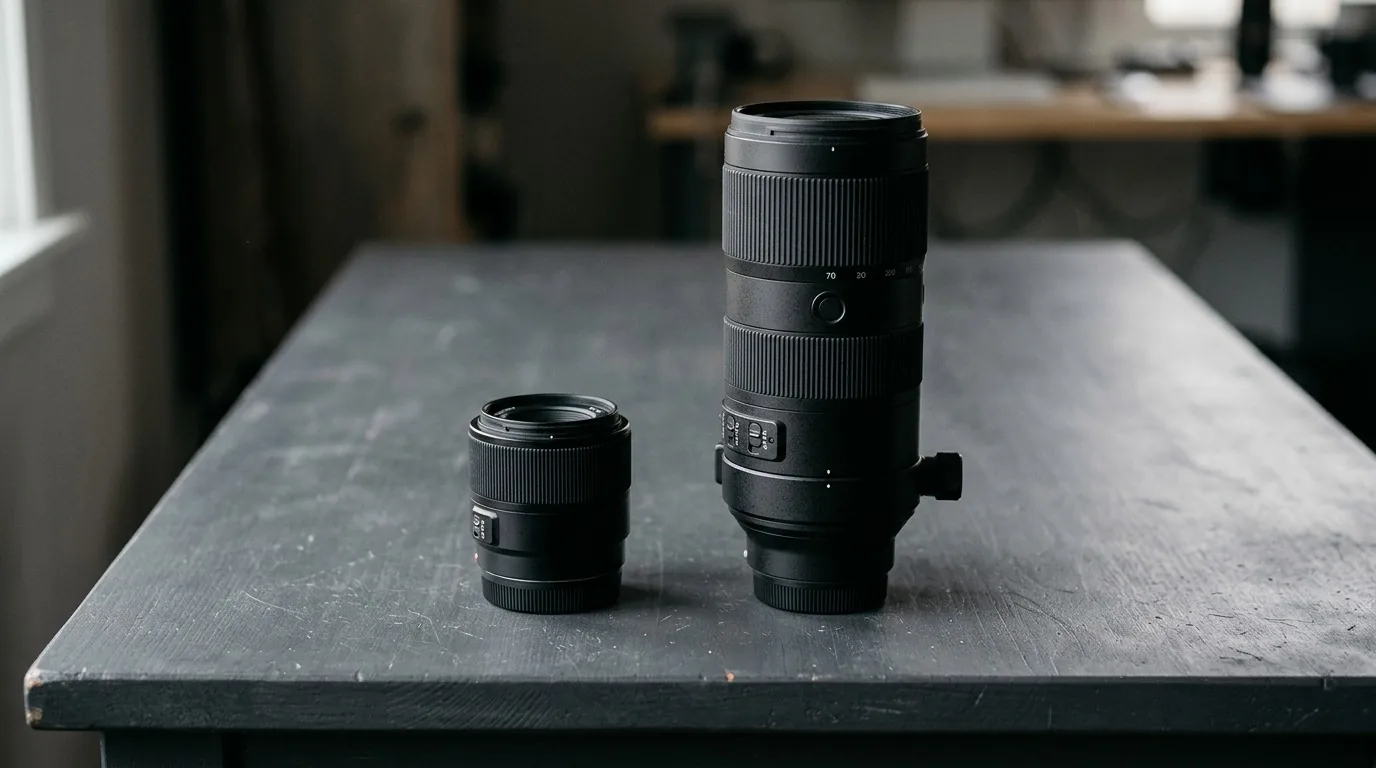
A zoom shows two focal lengths, such as 24-70mm. A prime shows only one. That is the quickest way to tell them apart on a shelf or in a listing.
Prime lens or fixed lens?
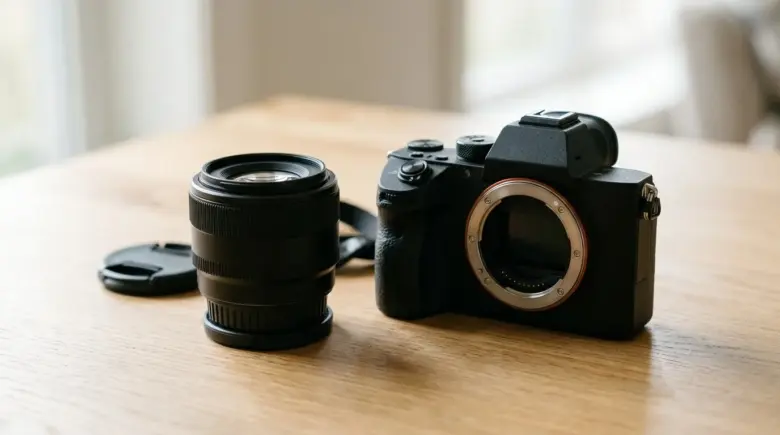
Both terms are correct when you are talking about focal length. A fixed focal length lens and a prime lens are the same thing. There is one possible mix-up, however. “Fixed lens camera” means a camera whose lens cannot be removed, such as many compact cameras. That lens may even be a zoom. So when you read “fixed lens”, look at the context.
Older writing sometimes uses “prime” for the main lens in a two-lens setup, in contrast with an add-on converter. That usage has mostly faded, and you will rarely see it today.
What a prime lens is good at
- Low light: f/1.8 or f/1.4 lets in far more light than a typical kit zoom. See how each stop adds up in our guide to what a fast lens does.
- Background blur: wide apertures give the soft look that photographers want for portraits. Learn the steps in our guide on how to get bokeh.
- Small size: with no zoom mechanism, many primes are much smaller than a zoom of the same aperture.
- Value: a basic f/1.8 prime is often the cheapest fast lens a camera system offers.
- Learning: one fixed view makes you think about position and framing, as our article on the benefits of a prime lens explains.
What you give up
You lose flexibility. When you cannot move closer, such as at a concert or across a river, a prime simply cannot change its framing. You also carry more lenses to cover the same range, and every lens change takes time and exposes the sensor to dust. For a full comparison by type of shoot, read our fixed vs zoom lens guide.
Primes are also not automatically sharper than every zoom. A good design and a good price bracket matter as much as the type. Our article on lens sharpness separates fact from habit.
Common prime focal lengths and what they do
| Focal length (full frame) | Type | Typical use |
|---|---|---|
| 14 to 24mm | Wide | Landscape, night sky, interiors |
| 28 to 35mm | Moderate wide | Street, travel, documentary |
| 40 to 50mm | Normal | Everyday photos, simple portraits |
| 85 to 135mm | Short telephoto | Portraits, details |
| 90 to 105mm macro | Macro | Close-up work |
| 300mm and up | Super telephoto | Wildlife, sports |
On a camera with a smaller sensor, the same lens shows a narrower view. Multiply by the crop factor, about 1.5 on most APS-C cameras, to compare with the table.
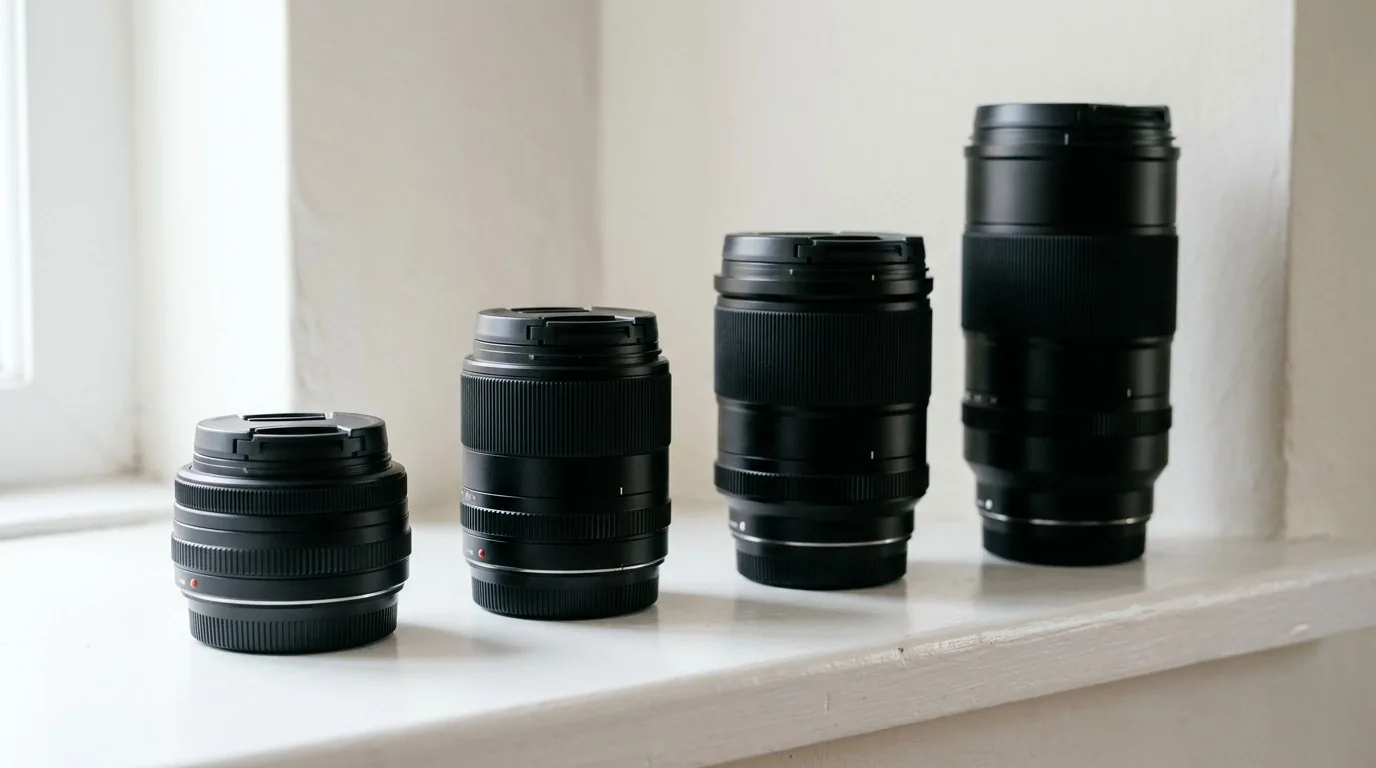
Why primes are often cheaper for the same aperture
A zoom must keep the image sharp and bright across a range of focal lengths, using groups of glass that move inside the barrel. A prime has only one case to solve. This is why a 50mm f/1.8 can cost a fraction of a 24-70mm f/2.8, even though the prime gathers more light.
Who should buy a prime lens?
If you own only a kit zoom, a prime is often the most useful next purchase. It solves the two problems kit lenses have: too little light indoors and backgrounds that stay busy. You do not need to replace your zoom. Keep it for travel and use the prime when the light drops or when you want a portrait.
If you shoot sports, wildlife or fast-changing events, a zoom should come first. A prime then becomes your second lens for low light.
Which prime should you buy first?
- Look at your own photos and find the focal length you use most.
- Think about the space you shoot in. Small rooms favor wider lenses.
- Pick the f/1.8 version first. It gives most of the benefit at a fraction of the price of f/1.2.
- Check your mount and whether autofocus works on your camera.
Most people start with a 35mm or a 50mm. Our 35mm vs 50mm comparison will help you choose, and our guide to used camera lenses shows how to save money on your first one.
Prime lens questions
What does a prime lens do?
It gives one fixed view of the scene, usually with a wider aperture and a smaller body than a zoom at the same price.
What is the difference between a prime and a zoom lens?
A prime has one focal length. A zoom covers a range and changes framing by turning a ring.
Is a 50mm lens a prime lens?
Yes, as long as it is fixed at 50mm. A zoom that passes through 50mm, such as a 24-70mm, is not a prime.

Adriano Antonio Rodrigues da Silva edits PrimeFrame Studio. The guides on this site are research-based explainers on prime lenses, built from manufacturer specifications and published technical tests. They are not personal lab reviews.