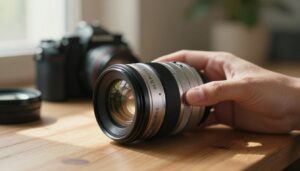
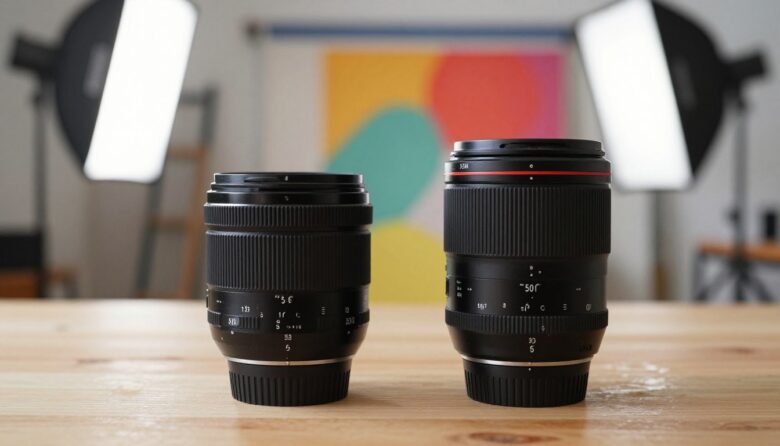
- I test lenses every week to see how different lengths shape my images on a full frame camera. I’ve learned that choosing between these two focal options can define your creative voice. Picking the right lens is one of the most important steps in my photography journey.
In this short guide I’ll explain technical differences and real-world uses. I cover how each length affects framing, depth, and movement. My goal is to help you find the one lens that fits your style and budget.
Module 1: The Day the 50mm “Saved” Me (and What I Learned)
“I vividly remember a wedding in a cramped, dimly lit chapel. I was dead set on using my 35mm to capture the ‘vibe’ of the place, but the background was a visual mess of cables and sound gear that I just couldn’t frame out. In a moment of frustration, I swapped to my 50mm f/1.8.
It was a game-changer. What the 35mm showed as ‘messy context,’ the 50mm transformed into an intimate portrait, isolating the bride’s emotion with a compression that simply cleaned up the scene. The win wasn’t that one lens was better, but that I finally understood that sometimes, less information in the frame is what tells the real story. Ever since, I never underestimate the power of ‘closing’ your gaze when the environment refuses to cooperate.”
Whether you are new to shooting or a seasoned pro, understanding nuance saves time and money. You’ll get clear tips so you can pick lenses that truly improve your work.
Key Takeaways
- Choosing a lens shapes your images and creative style.
- Both focal lengths work well on a full frame camera for varied subjects.
- I recommend testing each on your camera to see framing and depth differences.
- Know how length influences background and subject separation.
- Pick the one that matches your shooting needs and long-term goals.
Understanding the 35mm vs 50mm Prime Lens Debate
Each focal length tells a different visual story when mounted on a full frame camera. The conversation among photographers often centers on how those stories change framing, depth, and movement.
I remind photographers that every lens has a specific focal length. That number decides how much of the scene fits in a single frame and how subjects relate to their background.
Choosing between these two common focal lengths comes down to your shooting habits. Do you move to frame a subject, or do you let the lens define the scene? Your answer will guide which length serves you best.
Owning one of these lenses often feels like a rite of passage for serious shooters. Analyze the technical differences and match them to your goals to make a practical purchase that improves your photography over time.
- Popular for street, portrait, and everyday work on a full frame body.
- Decide by how you want to interpret perspective and subject separation.
- Test both on your camera to see which supports your long-term style.
| Feature | Wider Length | Standard Length | Best For |
|---|---|---|---|
| Field of view | Broader scene | Tighter, focused | Environmental vs intimate shots |
| Subject separation | Moderate | Strong | Background control |
| Typical use | Street, landscapes | Portraits, low-light | Everyday versatility |
| Movement | Use your feet | Stand closer for framing | Framing technique |
How Focal Length Impacts Your Perspective
Perspective changes everything; a slight shift in focal length can alter how a scene feels. I want you to see how a lens shapes not just framing, but the relationship between subject and background.
The Human Eye Comparison
On a full frame camera, a 50mm focal length lens gives a field view that feels close to what your eye sees. That makes portraits and everyday shots feel natural and familiar.
A wider 35mm focal length lens captures more of the world. It lets you place people inside their environment and show more of the scene without stepping back.
Zooming with Your Feet
I always tell shooters: zooming with your feet is the best way to control perspective when you use fixed-length lenses. Move closer to make a subject larger in the frame. Back up to include more surroundings.
“Longer focal lengths produce more compression, pulling the background closer to the subject.”
Understanding how distance and length interact is a vital skill. It helps you decide when to use wider fields for context or longer focal lengths for tighter, compressed scenes.
- The focal length determines the distance between glass and sensor and how you view a scene.
- Longer focal lengths increase compression and change background scale.
- Practice moving to change composition rather than relying on zoom.
The Role of Sensor Size in Your Choice
Sensor size directly changes how a lens frames a scene on your camera. If you use a crop body like the Sony a6600, expect the field of view to differ from a full frame setup.
Remember that the crop factor multiplies the focal length, so a wider lens on a crop camera will behave like a longer one on a full frame body. This can surprise photographers who assume lenses act the same across systems.
Check your camera manual to learn your model’s crop number. Also verify whether a lens is built for full frame or crop bodies to avoid unexpected framing and vignette issues.
- I recommend testing lenses on your camera to see real-world results.
- Understand the sensor and factor before you buy to get the exact field of view you want.
“Know your sensor — it changes what your glass actually sees.”
Why Prime Lenses Enhance Your Creative Vision
Learning to compose without a zoom changed how I approach every shoot. Using a fixed focal length lens helps me focus on intent instead of options.
Moving with purpose is the first benefit. A single focal length forces me to walk, crouch, or step back to get the right angle. That physical practice sharpens composition and trains my eye.
Module 2: The Raw Truth About the 35mm
“I’ll be blunt: many beginners actually hate the 35mm and don’t know why. The truth is, the 35mm is a ‘lazy’ lens if you don’t know how to work your angles. It doesn’t give you that easy, buttery bokeh you get from a 50mm or 85mm.
If you just stand there, the photo looks like an expensive phone snap. For the 35mm to shine, you have to ‘get your boots dirty,’ step within three feet of your subject, and accept that the background is a character in the photo. If you’re afraid to interact with what you’re shooting, the 50mm is your shield; if you want to be part of the scene, the 35mm is your voice. Don’t buy a 35mm unless you’re ready to invade some personal space.”
Overcoming the Lack of Zoom
The lack of zoom is a feature, not a flaw. It makes me think about distance, background, and how people fill the frame. I plan shots rather than rely on a quick zoom.
- Fast aperture on a prime lens lets more light hit the sensor, which helps in low-light photography.
- Limiting focal lengths improves how I frame people and scenes, so I learn lighting and depth faster.
- Many photographers say this discipline builds technical skill and a stronger visual voice.
“By moving my feet, I control perspective and tell a clearer story.”
Benefits of Shooting with a Wider Angle
Shooting with a wider field often helps me tell the story of a place and its people. I use this angle to include context without stepping back constantly.
A wider lens is ideal for street photography because it captures more of the scene and lets you show environment and action together. It keeps subjects grounded in their setting.
I also rely on this length for group portraits. It fits more people in the frame while keeping a natural feel, so I don’t need a long distance to compose shots.
Getting closer to a subject with a wider lens creates intimacy. You can include background clues that add story without sacrificing the main focus.
“A wider angle gives you context and keeps your viewer inside the moment.”
- Great for travel — light and versatile for full frame use.
- Helps in tight indoor spaces where you cannot move back.
- Encourages creative framing and movement instead of zooming.
| Benefit | Why it helps | Best use |
|---|---|---|
| Expanded field view | Includes environment and subject in one frame | Street photography, travel |
| Group portraits | Fits multiple people without long distance | Events, family photos |
| Close intimacy | Get nearer to subject to add presence | Documentary portraits |
When to Choose the Standard Focal Length
I reach for a standard-length option when I need images that read like real life. The 50mm f/1.8 — often called the nifty fifty — earns that trust because it delivers a natural perspective that flatters faces and keeps backgrounds honest.
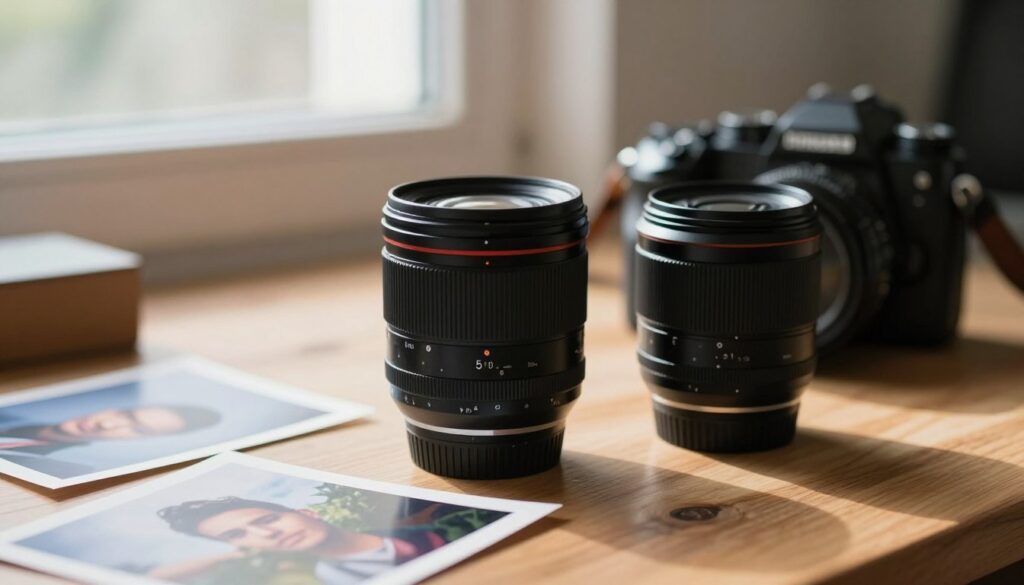
Why pick this lens? It produces very little distortion on a subject and works well for candid portraits. You can stay close without warping features, which helps when you want real, relaxed expressions.
- I recommend this lens to anyone who wants one versatile tool for most shoots.
- Many photographers favor it for candid portrait work and everyday photography.
- On a full frame camera, it doubles as an all-day carry lens that needs little post-correction.
Practical tip: If you plan to travel light, this length gives a pleasing angle and reliable results across scenes. It’s a dependable choice when you want a single lens to cover portraits and general work.
“A standard lens often feels like what your eye expects — honest and useful.”
Mastering Depth of Field and Background Blur
Dialing in shallow focus gives your pictures an instant sense of depth and intent. I focus on how length, aperture, and distance work together to pull a subject away from the scene.
Subject Separation Techniques
Move the distance between your subject and the background. Even a bit of space makes a big difference on a full frame camera.
Use a wide aperture to thin the depth of field. Stand a little closer and let the lens render the rest soft.
Achieving Creamy Bokeh
I often use a longer focal length to increase compression and smooth the background. That helps draw the viewer’s eye to people and portraits.
Tip: Combine a fast aperture on a quality lens with careful background choice. Patterns and lights turn into pleasing blur when the field is shallow.
“Mastering the subject-to-background relationship is what lifts an image from good to professional.”
- Test different focal lengths to see how much blur each gives.
- Try telephoto compression to isolate faces without distortion.
- Remember: aperture, distance, and lens choice together shape the view.
Performance in Low Light Conditions
When light fades, the right lens can keep a shoot alive and full of detail. I reach for fast glass when I know flash isn’t an option.
A fast aperture is the single biggest advantage in dim scenes. A wide aperture lets more light hit the sensor so I can keep shutter speeds high and reduce motion blur.
I often grab my 50mm f/1.2 when I work in dark venues. That length and aperture combination lets me freeze movement and still hold a pleasing background blur around the subject.
- Fast lenses allow lower ISO or faster shutter speeds compared to kit glass.
- On a full frame camera, a fast lens gives cleaner files and better dynamic range.
- High-quality glass performs far better in challenging light than standard zooms.
“A fast lens turns difficult light into usable light and gives you more creative control.”
Practical tip: pair a fast lens with a capable camera and you get the best low-light results. Test combinations to see how each lens affects your view and final image quality.
Portability and Weight Considerations
When I travel, the size and weight of my lens decide whether I actually take photos. Carrying lighter gear keeps me shooting for longer and makes every outing feel easier.
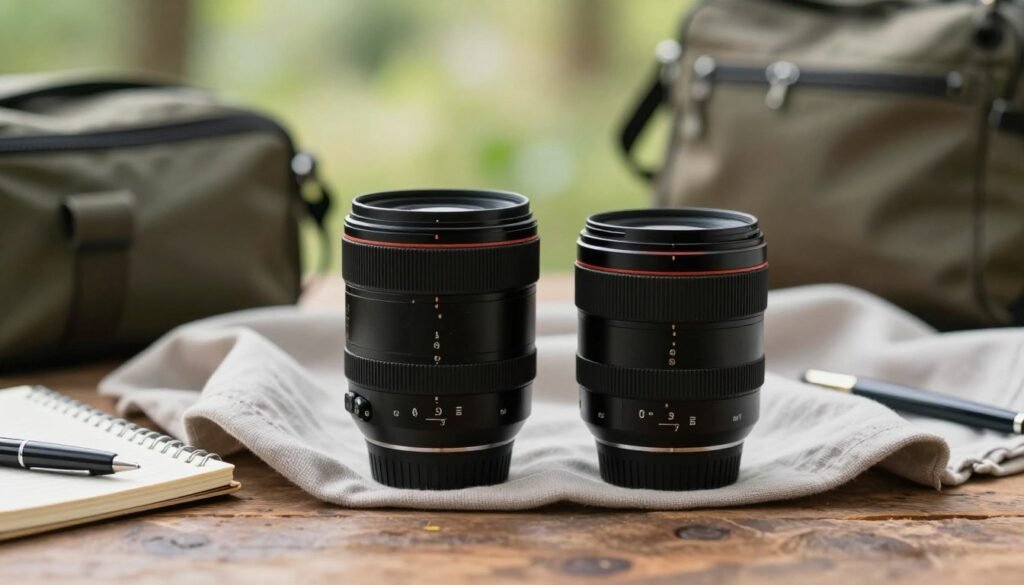
Prime lenses are usually smaller and lighter than zooms. That means less fatigue and more moments captured on a long day of shooting.
The compact shape also feels less intrusive. People react more naturally when a small lens hangs from my camera, so candid shots come easier.
- I pack a lightweight lens when I want to travel light and still get sharp images.
- A smaller setup fits in a day bag, so I bring my camera on walks and trips.
- Portability often wins; I shoot more because the gear is simple to carry.
“A lighter kit means I shoot more often and miss fewer moments.”
| Factor | Smaller Lenses | Impact |
|---|---|---|
| Weight | 200–400 g typical | Less fatigue, longer shoots |
| Size | Compact mount and barrel | Easier to carry in small bags |
| Public reaction | Less intimidating | Better candid results |
Evaluating Your Specific Photography Style
Your shooting habits and favorite subjects should steer which lens you keep on your camera. I start by listing what I shoot most and where I move during a session. That clarity makes it simple to match a focal length to my style.
Portrait Photography Needs
For portraits, I favor a lens that flatters faces and controls background blur. A slightly longer focal length helps compress features and keeps skin tones natural.
Tip: Test how the lens renders eyes and background at different distances. That reveals whether the length works for headshots versus full-body portraits.
Street and Documentary Work
When I shoot street photography, I want a field view that shows people in context. A wider lens lets me include more of the world and capture candid moments without stepping too far back.
Practical note: move with your camera. The way you physically approach subjects changes the shot more than swapping glass mid-walk.
Landscape and Environmental Shots
Landscapes need a lens that keeps the scene readable and detailed across the frame. I choose a focal length that preserves depth and avoids unwanted compression.
Consider whether you want dramatic foreground interest or a broad field view. That decision guides which lenses fill your bag for travel and outdoor work.
- I always advise testing both focal lengths on your camera in real situations.
- Think about subjects — people or places — before you commit to buying a new lens.
- Many photographers pair a wider option with a longer telephoto to cover most needs on a full frame body.
Testing Focal Lengths Before You Buy
Before I buy, I always try focal lengths in the places I shoot most. Renting a lens for a weekend or a week shows how a given length changes my work in real situations.
I use simple tests. I lock a zoom with tape at a target focal length and shoot daily. That quick trial reveals how the angle and field work for my subjects.
Renting gear is cost-effective. It lets me handle high-end lenses and compare sharpness, bokeh, and weight before I invest.
- Test in your usual locations to judge framing on your camera and to account for crop factor.
- Try portraits and wider scenes so you see how a lens renders a subject at different distances.
- Let time and practice guide you—many photographers only decide after real use.
“Trying gear in real-world shoots saves money and shapes better buying choices.”
| Test | What to Check | Why it Matters |
|---|---|---|
| Locked zoom | Framing and angle | Shows daily habit fit |
| Rental lens | Sharpness, weight, bokeh | Real comparison |
| Crop test | Field on crop vs full frame | Account for crop factor |
Recommended Gear for Your Camera System
I pick gear that matches how I move, shoot, and tell a story on location.
For Sony users, the Sony 35mm f/1.8 is a great all-around lens that costs under $800. It balances sharpness, weight, and price so your camera stays nimble on long days.
If you want the absolute best, the Sony 35mm f/1.4 GM is a higher-tier lens at around $1,400. It gives extra rendering and low-light headroom when you need top performance.
I also recommend a budget-friendly 50mm f/1.8 for photographers who want a simple, versatile option. Many shooters start there and learn how a single lens shapes their work.
Always check mount compatibility before you buy. Verify the lens fits your specific camera body and consider how crop factors will change the field of view.
| Recommendation | Price Range | Best for | Crop note |
|---|---|---|---|
| Sony 35mm f/1.8 | Under $800 | Everyday, travel | Works well on full frame; crop tightens view |
| Sony 35mm f/1.4 GM | ~$1,400 | Pro portrait and low light | High image quality on any sensor |
| 50mm f/1.8 | Budget | Starter portrait work | Crop bodies give longer effective focal length |
Final tip: invest in quality glass that suits your camera and workflow. Good lenses improve every shoot and keep your images looking cleaner and more consistent.
Module 3: The “Gaffer Tape” Test (Golden Tip)
“Before you drop hundreds or thousands on a new prime, I always give my students this advice: if you own a zoom lens (like a 24-70mm or an 18-55mm kit lens), try the Gaffer Tape Test.
Set your lens to 35mm and literally tape the zoom ring so it won’t move. Go out and shoot a full day like that. The next day, do the exact same thing at 50mm. The focal length that makes you forget the zoom is ‘broken’ is your photographic soulmate. Prime lens photography is a state of mind, and this bit of ‘controlled struggle’ will save you a lot of money and regret before you hit that checkout button.”
Final Thoughts on Choosing Your Next Lens
Final Thoughts on Choosing Your Next Lens
Your lens choice should match how you move and what you love to photograph. I want you to pick gear that makes shooting feel easy and fun, whether you favor street photography or close portraits.
Choose by habit, not hype. Think about aperture, sensor factor, and how each length renders blur and depth in your frame. The best lens is the one you use every day.
Many photographers keep both focal lengths for flexibility. Try each on your camera, note how they shape a scene, and buy the type that supports your long-term style.
Thanks for reading — good luck finding the lens that fits your eye and your workflow.
FAQ
Which focal length feels closest to how I see the world?
I find a standard focal length that sits between wide and telephoto often matches my natural perspective. It renders subjects with minimal distortion and a field of view that feels familiar, making it easy to frame people and scenes without drastic compression or exaggerated depth.
How does focal length change background blur and subject separation?
Longer focal lengths compress space and make backgrounds appear closer and more blurred, while wider angles keep more of the scene in focus. I use distance and aperture together to control separation: move closer to the subject and use a larger aperture for stronger blur, or step back and stop down for more context.
Will sensor size affect how a lens performs on my camera?
Yes. A cropped sensor narrows the effective field of view, so a lens behaves like a longer focal length compared to full frame. I always check the crop factor for my body to anticipate framing and how much of the scene I’ll capture.
Do prime lenses improve image quality compared to zooms?
Often they do. Fixed focal length optics typically deliver sharper images, wider maximum apertures, and simpler construction. I appreciate the consistent rendering and the way a single focal length forces me to think about composition.
How do I cope without a zoom when shooting street or events?
I “zoom with my feet”—move closer or farther to change composition. That practice improves how I read scenes and positions me to catch decisive moments. It also encourages creative framing that a zoom might discourage.
Which focal length is better for environmental portraits and landscapes?
Wider focal lengths capture more of the surroundings, making them ideal for environmental portraits and expansive landscapes. I use a shorter focal length when I want to include context and tell a visual story about location and subject together.
What should I consider for low-light shooting and indoor portraits?
Look for lenses with wide apertures and good control of coma and chromatic aberration. I prioritize fast optics that let me keep shutter speeds up without cranking ISO too high, and I pay attention to autofocus speed and accuracy in dim conditions.
How much does weight and size matter for travel and street work?
It matters a lot. Lighter, smaller lenses keep my kit discreet and reduce fatigue on long walks. I often choose gear that balances image quality with portability so I can shoot longer and stay agile.
Are there subject distance or perspective trade-offs I should know about?
Yes. Wider angles require getting closer to the subject for strong presence, which can exaggerate features. Longer focal lengths allow more distance and flatter facial proportions. I pick the focal length based on the look I want and the working distance I need.
How can I test different focal lengths before buying?
Rent lenses, borrow from local camera stores, or try them on at meetups. I also shoot the same scene at different focal lengths and compare framing, background, and depth rendering to see what matches my style.
Which focal length should I choose for street and documentary photography?
Street work benefits from a balance between situational awareness and subject intimacy. I prefer a wider-to-standard field of view that lets me include context while staying close enough to engage with subjects and moments.
What gear recommendations fit different camera systems?
Choose lenses with proven optical quality and reliable autofocus from brands compatible with your mount—Canon RF, Nikon Z, Sony E, Fujifilm X, or Micro Four Thirds each have standout options. I pick lenses that match my sensor size and shooting needs for best results.
How does perspective compression affect composition with longer lenses?
Perspective compression makes background elements appear larger and closer to the subject, which can create a cinematic look and emphasize layers. I use that effect to simplify backgrounds and draw attention to my subject.
What aperture should I prioritize for portraits?
A wide aperture gives me control over depth of field and smoother backgrounds. I aim for lenses that open wide while maintaining sharpness on the subject’s eyes, balancing bokeh quality with overall image clarity.

Noah Sterling is a prime lens photographer and visual storyteller dedicated to capturing sharp, intentional imagery through fixed focal lengths. He shares practical insights on composition, depth, and lens choice, helping photographers master simplicity and achieve powerful, professional results.